(205) 823-0780



Veterinary Compounding: Helping Pets Take the Medication They Need
Giving medication to a pet isn't always easy.
Maybe your dog spits out every pill you hide in peanut butter. Or maybe your cat disappears the moment they hear a pill bottle shake. Some pets need doses that simply aren't available from traditional manufacturers, while others experience side effects from inactive ingredients found in commercially available medications.
For many pet owners, these challenges can make treating a medical condition feel almost impossible.
Fortunately, veterinary compounding offers another solution.
At Precision Rx Pharmacy, we work alongside veterinarians throughout Birmingham and surrounding communities to prepare customized medications designed specifically for each animal's unique needs. Whether it's transforming a difficult tablet into a chicken-flavored liquid, preparing a tiny dose for a toy breed, or creating a transdermal gel that can be applied to a cat's ear, compounding helps make treatment more manageable for both pets and their owners.
What Is Veterinary Compounding?
Veterinary compounding is the process of preparing a customized medication based on a veterinarian's prescription.
Instead of relying only on commercially manufactured products, a compounding pharmacy can tailor medication by adjusting:
- Dosage strength
- Flavor
- Dosage form
- Ingredient combinations
- Medication concentration
- Alternative ingredients when appropriate
Every pet is different. Age, weight, breed, medical condition, and behavior all influence how medication should be administered.
That's why individualized treatment often produces a better experience than a one-size-fits-all approach.
Why Many Pets Struggle With Standard Medications
Unlike humans, animals don't always cooperate when medication time arrives.
Many pet owners encounter challenges like:
- Refusing pills
- Vomiting medication
- Spitting tablets back out
- Difficulty swallowing
- Hiding after previous medication attempts
- Stress during every dosing session
Cats can be especially challenging.
Many cats become extremely anxious with oral medications, turning daily treatment into a struggle that affects both the owner and the animal.
Dogs present their own challenges as well.
Large breeds may require significantly higher doses than smaller breeds, while tiny breeds often need strengths that are difficult to obtain from commercially manufactured products.
Why Accurate Weight-Based Dosing Matters
One of the biggest differences between human and veterinary medicine is dosing.
Human medications are generally produced in standard strengths.
Pets, however, range dramatically in size.
Consider the difference between:
- A 4-pound Chihuahua
- A 15-pound cat
- A 65-pound Labrador Retriever
- A 150-pound Great Dane
Each requires dramatically different dosing.
Some commercially available medications simply cannot provide the precise amount needed for very small or unusually large animals.
Compounding allows veterinarians to prescribe:
- Exact weight-based doses
- Appropriate concentrations
- Easier administration
- Reduced medication waste
This level of customization supports safer and more accurate treatment.
Flavored Medications That Pets Actually Accept
One of the biggest advantages of veterinary compounding is improving medication acceptance.
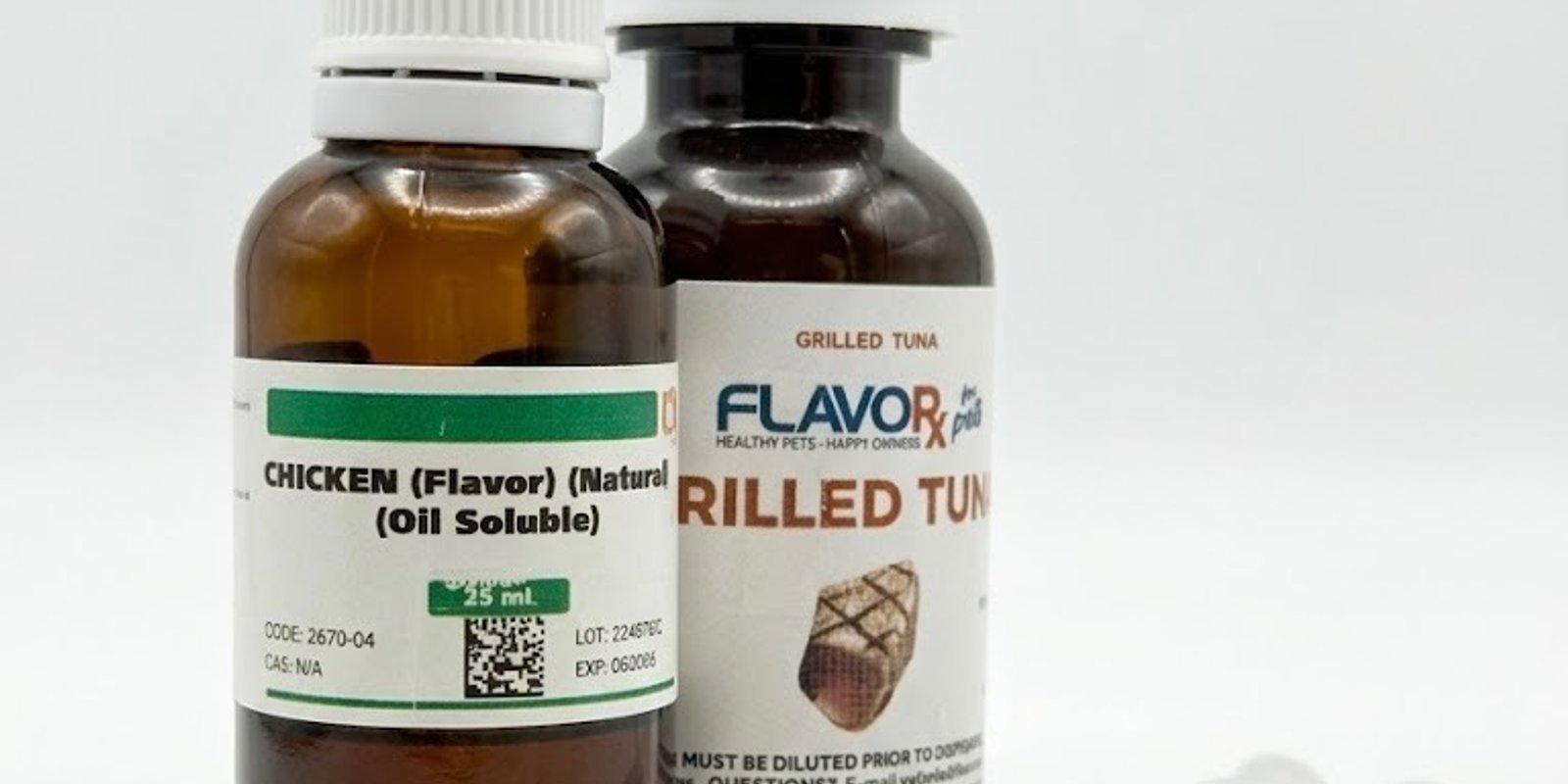
Instead of forcing bitter tablets, compounded medications can often be prepared with pet-friendly flavors.
Popular options include:
- Chicken
- Tuna
Every animal has individual preferences.
Many dogs happily accept flavored liquids that resemble treats.
Cats often respond much better to fish or tuna-flavored preparations than standard tablets.
Improving taste can significantly reduce the daily struggle many families experience during medication time.
Transdermal Medications: A Game-Changer for Cats
One of the most valuable advancements in veterinary compounding is transdermal medication.
Instead of swallowing medication, certain prescriptions can be compounded into a gel that's applied to the inside of the cat's ear, where the medication is absorbed through the skin.
This option can be especially beneficial for cats that:
- Refuse pills
- Vomit oral medications
- Become stressed during treatment
- Have difficulty swallowing
For many owners, transdermal therapy transforms medication from a stressful event into a quick daily routine.
Hyperthyroidism in Cats
One of the most common reasons veterinarians prescribe compounded transdermal medications is feline hyperthyroidism.
Cats diagnosed with hyperthyroidism often require long-term treatment.
Unfortunately, many resist taking tablets every day.
Compounded transdermal formulations can provide an alternative administration method that may improve consistency and reduce stress for both the cat and the owner.
Your veterinarian will determine whether a transdermal formulation is appropriate for your pet's specific condition.
Custom Solutions for Dogs
Dogs may be more willing than cats to take medication, but not always.
Compounding can help dogs that:
- Need customized doses
- Have allergies to inactive ingredients
- Require long-term therapy
- Need medications combined when appropriate
- Refuse tablets or capsules
Customized formulations help simplify treatment while supporting better adherence to the veterinarian's care plan.
Conditions Commonly Treated with Veterinary Compounding
Veterinary compounding may be appropriate for many chronic and acute conditions, including:
Thyroid Disorders
Custom formulations help deliver individualized dosing for pets requiring long-term thyroid management.
Heart Disease
Certain cardiac medications may require customized strengths or alternative dosage forms.
Chronic Pain
Pets living with arthritis or other painful conditions may benefit from compounded medications tailored to their needs.
Skin Conditions
Topical creams, ointments, sprays, and solutions may be compounded for localized treatment.
Behavioral Conditions
Customized formulations may improve medication acceptance for pets receiving behavioral therapy.
Gastrointestinal Disorders
Flavoring and customized dosage forms may make digestive medications easier to administer.
Seizure Disorders
Certain seizure medications may require individualized strengths based on the veterinarian's treatment plan.
Why Chain Pharmacies Often Can't Meet Veterinary Needs
Many national retail pharmacies primarily stock medications designed for human patients.
While some can fill veterinary prescriptions, they often cannot:
- Create custom strengths
- Compound flavored suspensions
- Prepare transdermal gels
- Modify dosage forms
- Customize ingredients for pets
Veterinary compounding requires specialized training, equipment, quality standards, and experience.
A dedicated compounding pharmacy works closely with veterinarians to prepare medications tailored to each patient's unique needs.
Working Together With Local Veterinarians
Successful veterinary care is a team effort.
At Precision Rx Pharmacy, we proudly collaborate with veterinarians throughout Birmingham and surrounding communities to help ensure pets receive customized medications that support the prescribed treatment plan.
Our pharmacists communicate directly with veterinary clinics when clarification is needed, helping streamline the compounding process while maintaining accuracy and quality.
Whether a veterinarian needs a unique dosage, an alternative dosage form, or assistance finding a practical solution for a difficult-to-medicate pet, our team is here to help.
Benefits of Choosing a Veterinary Compounding Pharmacy
Customized medications can offer many advantages, including:
- Personalized strengths
- Easier administration
- Pet-friendly flavors
- Alternative dosage forms
- Improved medication acceptance
- Reduced stress for pets and owners
- Better support for long-term treatment plans
Every prescription is prepared according to the veterinarian's instructions and the individual needs of the animal.
Frequently Asked Questions
Is veterinary compounding safe?
Yes. When performed by a licensed compounding pharmacy following appropriate quality standards and using a valid veterinarian's prescription, compounded medications provide customized treatment options for many animals.
Can every medication be compounded?
No. Some medications are not suitable for compounding due to stability, effectiveness, or regulatory limitations. Your veterinarian and pharmacist can determine the most appropriate option.
Can medications be flavored?
In many cases, yes. Flavor selection depends on the medication, species, and formulation.
Can cats receive medication without swallowing pills?
For certain medications, yes. Transdermal formulations may provide an alternative method of administration when clinically appropriate.
Do I need a prescription?
Yes. Veterinary compounded medications require a valid prescription from a licensed veterinarian.
Why Pet Owners Choose Precision Rx Pharmacy
Pet owners want more than medication—they want solutions that make caring for a beloved companion easier.
At Precision Rx Pharmacy, we understand that every pet is unique. That's why we focus on customized veterinary compounding designed around each animal's individual needs and each veterinarian's treatment plan.
Whether your pet needs a customized dosage, a more appealing flavor, or an alternative dosage form, our experienced compounding team is committed to helping improve the medication experience from start to finish.
Give Your Pet the Personalized Care They Deserve
When standard medications aren't the right fit, customized veterinary compounding may provide a better solution.
If your veterinarian has recommended compounded medication, or if you're struggling to administer your pet's current prescription, Precision Rx Pharmacy is here to help.
Contact Precision Rx Pharmacy today to learn more about our Veterinary Medicine Compounding services and how we partner with local veterinarians to create customized medications for dogs, cats, and other companion animals.